What is a white label trading platform? A simple guide
A plain-English guide to white label trading platforms: what the term means, how the model works, what gets branded, what stays your job and how to choose a provider.
 EVO PlatformsTrading platforms7 min read

A white label trading platform is trading software built and run by a technology provider, which a brokerage offers to its clients under its own name, logo, colours and domain. Clients see one brand, the broker's, while the provider looks after the code, servers, updates and monitoring.
That is the short answer. This guide goes one level deeper: how the model works in practice, which parts of a brokerage can carry your brand, what stays your job, and how to judge a provider before you commit.
Key takeaways
- A white label trading platform is software built and run by a provider that a broker offers under its own brand.
- Good white labels cover every client screen: domain, sign-up, client area and platform, in the client's language.
- Offers range from platform-only to all-in-one systems with a CRM, back office and price feed.
- White label removes engineering work, but clients, payments, pricing and risk settings stay with the broker.
- EVO is all-in-one and live in less than 24 hours on a dedicated VPS. EVO plans start from $2,500 per month.
What does white label mean in trading?
The term comes from retail. A factory makes a product, leaves the label blank, and a shop sells it under its own brand. In trading, the product is software. One company builds the platform and keeps it running, and each brokerage offers it as its own, with a separate brand, domain and client base.
So white label is about who owns the brand, not who wrote the code. The client logs in on the broker's domain, sees the broker's logo and deals only with the broker. The provider stays in the background.
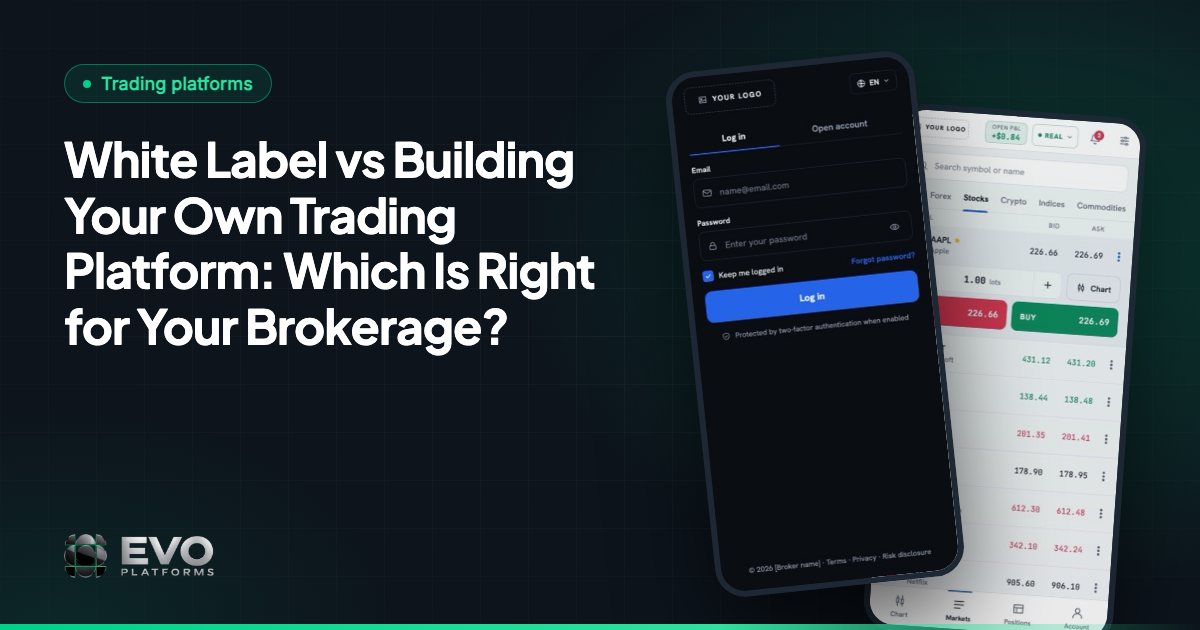
This is different from building your own platform, where you hire developers and own every line of code, along with every bug. We compare both routes in white label vs building your own trading platform.
How does a white label trading platform work?
The details vary by provider, but the path usually looks like this:
- 1Choose a provider and a plan. You agree what is included and what the monthly fee covers.
- 2Share your brand. You send your logo, colours, domain and the languages you want.
- 3The provider deploys. The platform goes up on a server with your branding applied.
- 4Set up the trading side. You choose which symbols to offer and set spreads, limits and leverage.
- 5Connect payments. You decide how clients deposit and withdraw.
- 6Open the doors. Clients sign up, verify, fund their accounts and trade, all under your brand.
From then on, the provider looks after the software and your team looks after the clients. Launch time differs widely between vendors, so ask for a clear date before you sign.
Which parts of the platform carry your brand?
A good white label covers every screen a client touches, not only the trading window. If the brand disappears at the deposit page, the experience feels stitched together and trust suffers. Look for these:
- Domain: the platform runs on your own web address.
- Logo and colours: your identity on every screen, in dark and light themes.
- Login and sign-up pages: branded from the first click.
- Client area: profile, verification documents, deposits, withdrawals and history under your name.
- Language: the interface in the languages your clients speak, including right-to-left Arabic if you serve Arabic-speaking traders.
- Website: marketing pages in your brand, with sign-ups going straight to your CRM. Our guide to the broker website and client area covers this in detail.
Platform-only white label vs all-in-one white label
Not every white label covers the same ground. This is the biggest difference between offers, and it is easy to miss when you compare product names alone.
| Question | Platform-only | All-in-one |
|---|---|---|
| What you get | A branded trading platform | Trading platform, CRM, back office and price feed in one system |
| Other tools | Usually sourced and connected separately | Included |
| Logins for your team | Can be one per tool | One |
| Who you call when something breaks | Depends on which tool failed | One provider |
| Good fit for | Brokers who already run a CRM and want to keep it | New brands and brokers who want fewer systems to connect |
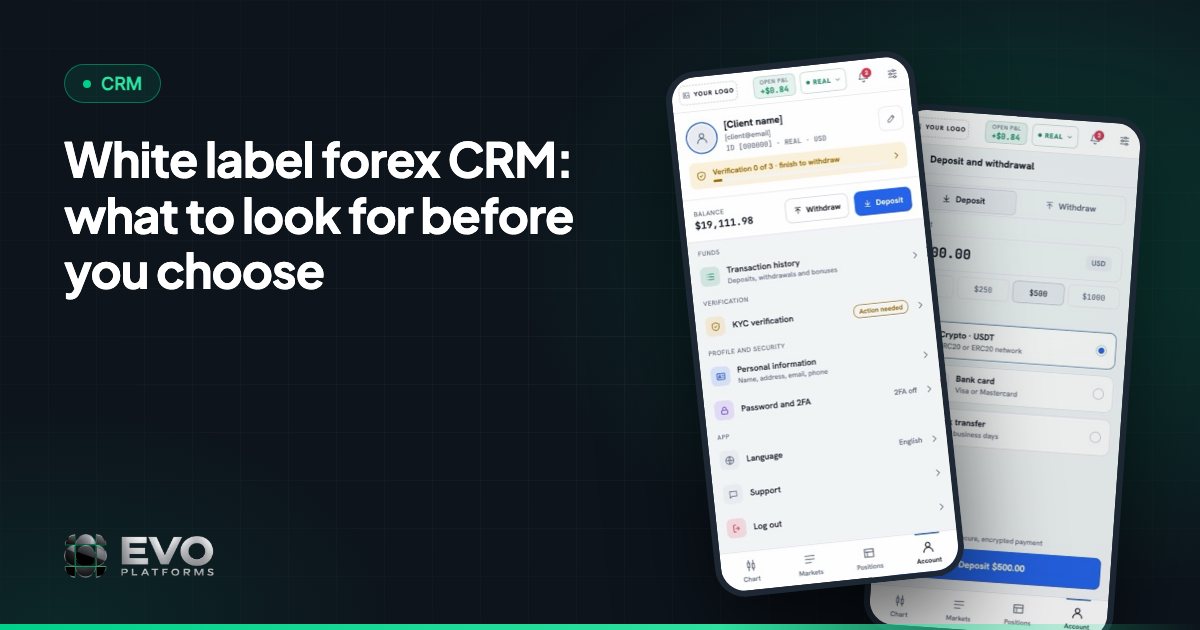
MetaTrader 5, cTrader and Match-Trader are names brokers often compare, and each has its own strengths and its own way of working with brokers. Those arrangements differ and change over time, so check the vendor's current offer. Our comparisons cover MT5 white label vs EVO, EVO vs cTrader and EVO vs Match-Trader. You may also see the term used for a single tool, such as a white label forex CRM.
What the provider does and what stays with you
White label removes the engineering work. It does not remove the business. This split is worth understanding before you start:
| Area | Provider | Your brokerage |
|---|---|---|
| Software | Builds, updates and fixes it | Tells the provider what clients need |
| Servers | Hosts and monitors them | No daily work |
| Prices | Delivers the feed, if included | Chooses symbols and sets spreads |
| Clients | Supplies the tools | Finds, verifies and serves them |
| Payments | Supplies deposit and withdrawal tools | Chooses methods and reviews transactions |
| Risk | Supplies the controls | Sets limits, leverage and margin levels |
| Brand | Applies it across the platform | Owns it, plus marketing and terms and policy pages |
Benefits and limits of a white label platform
Benefits
- Speed: you start from working software instead of a long development project.
- Predictable running costs: a subscription replaces an in-house engineering team.
- Focus: your people work on clients and growth, not on server problems.
- Continuous updates: improvements reach your platform without a project on your side.
Limits
- You depend on the provider: its uptime, roadmap and support quality affect your clients directly.
- You do not own the code: anything outside the product has to be requested, and may be quoted as custom work.
- Set-ups differ: providers host brokers in different ways, so ask how your data is separated.
- Moving later takes planning: clients and accounts have to be migrated with care, as we explain in switching your brokerage to EVO.
How to choose a white label trading platform
Ask every provider the same questions and get the answers in writing:
- Are the CRM, back office and price feed included, or sold separately?
- Will my clients see your name anywhere?
- Does my brokerage get its own server, or is it shared?
- Is the fee flat, or is there a setup fee or revenue share?
- Which payment methods can be connected, and who approves transactions?
- Which languages are included, and is Arabic fully right-to-left?
- How do I reach support at 3am, and how fast do you answer?
- On what date can I realistically be live?
If this is your first launch, the best trading platform for new brokers is a useful next read.
How EVO works as a white label platform
EVO Platforms is an all-in-one white-label brokerage system delivered as SaaS. Every plan includes the branded EVO WebTrader for desktop and mobile browsers, EVO CRM, the back office and a price feed with 250+ symbols, real-time streaming with no delays and any symbol on request. Your brand, logo, colours and domain appear everywhere, and clients never see EVO.
- Live in less than 24 hours: you pay, we deploy, and you are live the next day.
- Languages: English, Arabic with full right-to-left support, and German.
- Isolated server: each broker runs on a dedicated VPS, with an IP whitelist and security logs. Read more about broker platform security.
- Built-in risk management: in-house execution with spreads per symbol, symbol limits, leverage per client, margin call and stop out, take profit and stop loss, and suspended or disabled accounts. Risk groups and a dealing room are coming soon.
- Any payment method: USDT and other crypto, cards, bank transfer or local methods, with an approval flow in the CRM.
- 24/7 support on Telegram at @evoplatforms.
EVO plans start from $2,500 per month: one flat monthly fee with no setup fee and no revenue share. See pricing, explore the white label solution or contact us for a walkthrough.
Frequently asked questions
What is a white label trading platform?
It is trading software built and run by a technology provider that a brokerage offers under its own name, logo, colours and domain. Clients see the broker's brand, and the provider handles the code, servers and updates.
What does white label mean in forex?
It means a forex broker uses a provider's platform and presents it as its own. The broker owns the brand and the client relationship, and the provider stays in the background.
Is a white label platform the same as building my own?
No. Building your own means developing and maintaining the software yourself. With a white label you subscribe to working software and put your brand on it, and any custom features are requested from the provider.
Will my clients know who provides the platform?
That depends on the provider. With EVO they will not: your brand, logo, colours and domain are used everywhere, and clients never see the EVO name.
How long does it take to launch a white label platform?
It depends on the vendor. With EVO you can be live in less than 24 hours: you pay, we deploy your branded platform, CRM, back office and price feed on a dedicated VPS, and you start onboarding clients the next day.
This article is for general information only and is not legal, tax or financial advice.
Ready to launch your brokerage?
Trading platform, CRM, back office and price feed — white-label and live in less than 24 hours.