Paying your platform provider in USDT: a practical guide for brokers
USDT lets a brokerage pay its platform provider in minutes, any day of the week. Here is how to choose the right network, send safely, avoid the costly mistakes and keep clean records.
 EVO PlatformsStarting a brokerage7 min read
Your launch is set for Monday. On Thursday your bank holds the international wire to your platform provider for extra checks, and the money lands the following week. The platform is ready; your payment is not.
That is why many brokers now pay their tech providers in USDT. It settles in minutes, any day of the week, but it is also final: one wrong network or one copied address can lose the whole payment. This guide covers which network to use, a step-by-step routine, the mistakes that cost brokers money and what to keep for your books.
Key takeaways
- USDT payments settle in minutes, any day of the week, which helps when a launch or a renewal is close.
- Always send on the exact network named on the invoice; TRC-20 and ERC-20 USDT are not interchangeable.
- Confirm addresses through a second channel, send a test amount first and never copy addresses from your transaction history.
- Keep a separate operating wallet with approvals, 2FA and a small balance of TRX or ETH for fees.
- Record the invoice, transaction hash, network and dollar value of every payment, and ask a local accountant how to book it.
Why do brokers pay their platform provider in USDT?
Because it is fast, works across borders and many brokers already hold it. A USDT transfer confirms in minutes, at weekends and on bank holidays, with no correspondent bank in the middle.
- Speed. Your subscription is paid within the hour, which matters when a launch date or a renewal is close.
- No banking hours. Brokerages run around the clock; banks do not.
- Cross-border by default. A broker in Latin America, Africa or Asia can pay a provider anywhere without a chain of intermediary banks.
- Dollar value. USDT is designed to track the US dollar, so a $2,500 invoice is roughly 2,500 USDT, unlike paying in volatile coins.
- You may already hold it. Many brokerages keep part of their operating balance in USDT.
| USDT transfer | International bank wire | Card | |
|---|---|---|---|
| Speed | Minutes | Often several business days | Instant, but large cross-border amounts may be declined |
| Weekends and holidays | Yes | Usually no | Yes |
| Typical cost | A network fee that varies by network and traffic | Sending fee, plus possible intermediary bank fees | Card and currency conversion fees |
| Can it be reversed? | No, final once confirmed | Sometimes, with effort | Chargebacks are possible |
| Proof of payment | Transaction hash, visible on a public block explorer | Bank confirmation | Card statement |
Illustration: a broker paying $2,500 a month makes 12 payments and sends $30,000 a year to one provider. If each international wire carries $40 in sending and intermediary fees and takes three business days, that is $480 and more than a month of waiting a year. The same 12 payments in USDT cost a few network fees and arrive the same day.
Which network should you use: TRC-20, ERC-20 or another?
Use exactly the network your provider names on the invoice, and nothing else. USDT exists on many blockchains, and the same token on two networks is not interchangeable. Send TRC-20 USDT to an address that expects ERC-20 and the payment may never arrive.
Tether lists USDT on Ethereum, Tron, Solana, TON, Avalanche, Aptos, NEAR, Celo, Kaia, Polkadot AssetHub, Tezos, Liquid and Cosmos via Kava (as of November 2026 — check Tether's site). It no longer issues or redeems USDT on Omni, Kusama, Bitcoin Cash SLP, EOS and Algorand, so avoid those even if an old wallet still shows them.
| Network | Address looks like | Fee paid in | Good to know |
|---|---|---|---|
| Tron (TRC-20) | Starts with T | TRX (or rented energy) | Widely used for USDT payments; keep TRX in the wallet to send |
| Ethereum (ERC-20) | Starts with 0x | ETH | Fees rise when the network is busy; check the fee before sending |
| Other networks (Solana, TON and others) | Their own formats | The network's own coin | Use them only if the provider names them on the invoice |
Fees change. In August 2025 Tron's validators cut the network's energy price from 210 to 100 sun, which one report said brought a typical USDT transfer from about $2.47 to around $0.72; other analysts put the cost higher for wallets that pay in TRX directly. Treat any fee figure as a snapshot and check the fee your wallet shows before you send.
How should you set up a wallet for paying providers?
Keep a separate operating wallet for business costs. Do not pay suppliers from the same wallet that receives client deposits: it muddles your books and makes every outgoing payment harder for your finance team to explain.
- One operating wallet or exchange account for platform fees, marketing tools and other suppliers.
- Two people on large payments. One prepares the transfer and another approves it, using a multi-signature wallet or an exchange account with approval rules.
- Saved, verified addresses. Add your provider's address to a withdrawal whitelist once, after confirming it, so nobody pastes a new one under pressure.
- 2FA everywhere. On the exchange, the wallet app and the email linked to them.
- Gas in the wallet. A small balance of TRX or ETH, so the transfer does not fail on the day it is due.
The same habits protect the rest of your business. Our forex broker security checklist applies them to your CRM and back office.
Paying for a new platform this month? Ask us on Telegram how EVO billing in USDT works before you send anything.
Talk to us on TelegramHow do you send a USDT payment step by step?
Follow the same routine every time, and be strictest on the first payment to a new provider.
- 1Get the invoice in writing, with the amount, the network and the wallet address.
- 2Confirm the address through a second channel, such as your support group or a call with your account contact. Never trust an address that arrives by email alone.
- 3Send a small test amount first to any new address, and ask the provider to confirm it arrived.
- 4Check the network fee and your gas balance before the main transfer.
- 5Send the full invoiced amount. If you withdraw from an exchange, add its withdrawal fee on top so the provider receives the full sum.
- 6Copy the transaction hash (TX ID) and share it with the provider.
- 7Save the proof: invoice, transaction hash, date, amount, network and both addresses.
Illustration: an invoice for 2,500 USDT is paid from an exchange that deducts a 1 USDT withdrawal fee from the amount sent. Sent as 2,500, it arrives as 2,499 and the invoice shows as short. Sent as 2,501, it arrives in full. It sounds trivial until a renewal sits open over a weekend because of one dollar.
What can go wrong, and how do you avoid it?
USDT payments are final, so prevention is your only protection. These are the mistakes that cost brokers real money:
| Mistake | What happens | How to avoid it |
|---|---|---|
| Wrong network | Funds may be stuck or lost; recovery, if possible at all, is slow and not guaranteed | Match the network on the invoice and send a test amount |
| Address poisoning | A scammer sends you a tiny transfer from an address that looks like your provider's, hoping you copy it from your history | Copy addresses from your whitelist or the invoice, never from transaction history, and check the full address |
| Fake invoice or changed details | You pay a scammer posing as your provider | Confirm any change of address through a second channel before paying |
| Short payment | Exchange fees reduce the amount received | Add withdrawal fees on top |
| No gas | The transfer fails or stays pending | Keep TRX or ETH in the wallet |
| Frozen funds | Tether can freeze USDT held at addresses linked to crime or stolen funds | Pay from clean, well-documented business wallets |
Freezes are not rare. Security firm BlockSec counted 4,163 addresses blacklisted on Ethereum and Tron in 2025, holding about $1.26 billion in USDT. Ordinary business payments are rarely affected, but it is one more reason to keep your operating wallet apart from client flows and to know where every incoming transfer came from.
How should you record USDT payments in your accounts?
Record each payment as you would a bank transfer, plus the on-chain details. Your accountant will ask for them, and you will need them if a payment is ever disputed.
- The invoice and the provider's company details.
- The amount in USDT and its US dollar value on the day.
- The network, the transaction hash and the sending and receiving addresses.
- Who prepared and who approved the payment.
Can you pay EVO in USDT?
Yes. EVO subscriptions are payable in USDT, so you can pay for your platform the same way many of your clients fund their accounts.
EVO plans start at $2,500 per month, payable in USDT, with no setup fee and no revenue share. Each plan includes the branded EVO WebTrader, EVO CRM with the back office, the price feed and your own dedicated server, and you can be live in 24 hours. Your dedicated Telegram group (@evoplatforms) is open 24/7 for questions, billing included.
Talk to us on Telegram about USDT networks, invoices and wallet details before you pay.
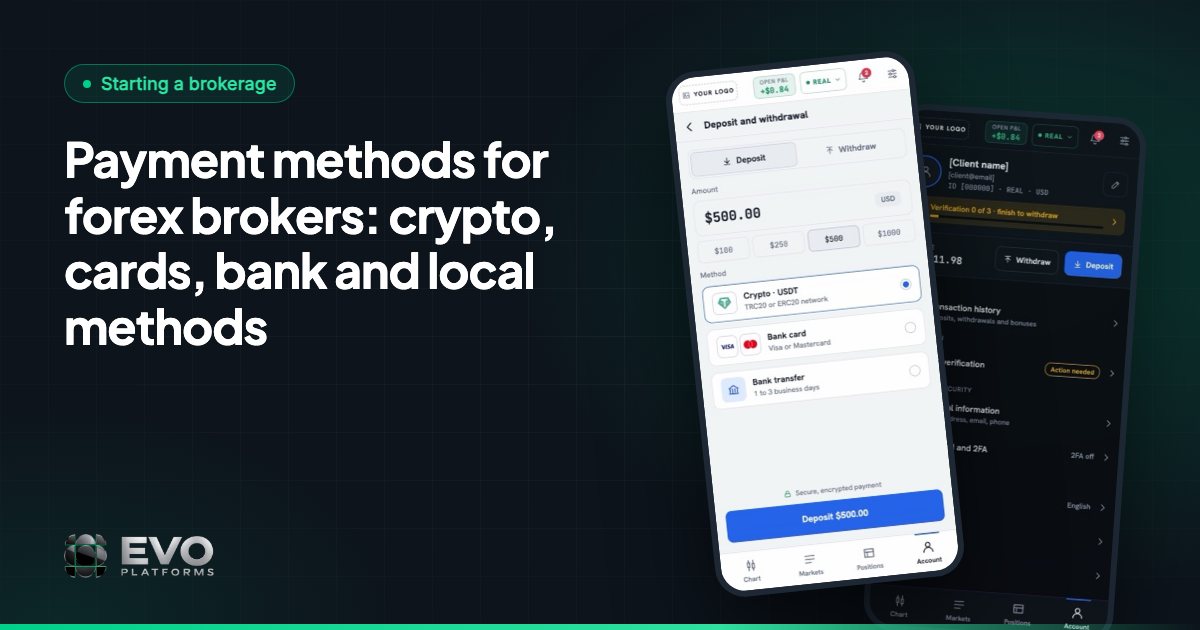
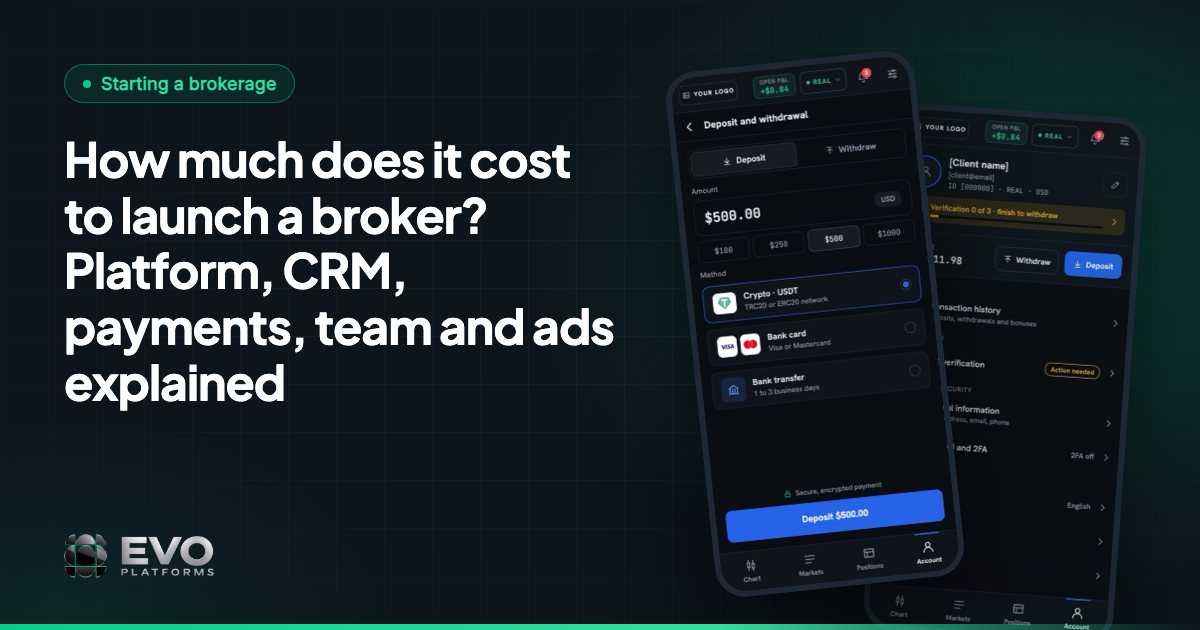
For the full picture of what the fee covers, read EVO Platforms pricing explained, compare it with the wider cost to start a brokerage, or see our guide to payment methods for your own clients, including USDT deposits. Ready to compare plans? Visit pricing.
Frequently asked questions
Can a USDT payment be reversed?
No. Once confirmed on the blockchain, a USDT transfer is final. If you sent too much or to the wrong place, you depend on the receiver to return it.
Do I need TRX to send TRC-20 USDT?
Yes. Fees on Tron are paid in TRX or with energy, so keep a small TRX balance or rent energy. ERC-20 transfers need ETH for the same reason.
What if I sent USDT on the wrong network?
Contact the receiver at once with the transaction hash, network and amount. Recovery is sometimes possible, but it is slow and never guaranteed, so treat prevention as the real fix.
Should I pay from an exchange or a private wallet?
Either works. Exchanges are simpler and offer withdrawal whitelists and approval rules; private wallets give you full control, including multi-signature setups. What matters is a fixed routine and two people on large payments.
Can I pay my EVO subscription in USDT?
Yes. EVO subscriptions are payable in USDT. Plans start at $2,500 per month with no setup fee and no revenue share.
We build EVO — the white-label trading platform, CRM and back office for brokers — and have worked with brokerages since 2020.
Published: 7 min read
This article is for general information only and is not legal, tax or financial advice.
Go live in 24 hours — talk to us on Telegram
Trading platform, CRM, back office and price feed on your own server, in your brand. Plans start at $2,500 a month, with no setup fee and no revenue share.